Diet
Mediterranean diet: the strongest long-term evidence
It is the dietary pattern with the deepest evidence base in cardiovascular outcomes. For body composition, it needs one adjustment.
Why it is well regarded
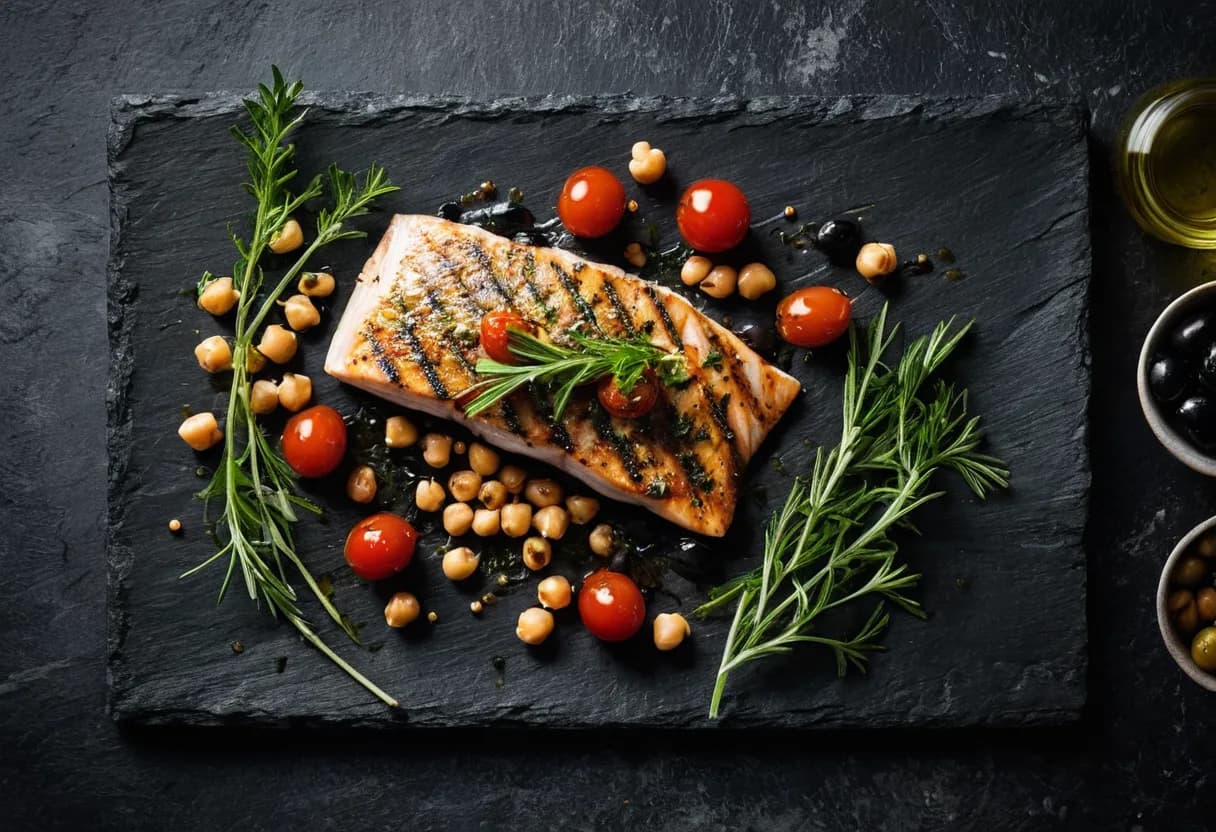
Olive oil as the main fat, fish, legumes, vegetables, whole grains, low intake of red meat and ultra-processed food.
It carries the largest body of long-term evidence in cardiovascular outcomes, and it does not depend on rigid restriction — which is what sustains adherence over years rather than weeks.
The adjustment it needs for body composition
The traditional version is moderate in protein. That is adequate for maintenance and insufficient to preserve lean mass through a calorie deficit.
The fix is direct and does not dismantle the pattern: raise fish, eggs, dairy and legumes until the protein target is met, keeping the rest of the structure intact.
Done that way, it is probably the best starting point for anyone who wants a sustainable pattern rather than a twelve-week protocol.
Find your protein target
Every recommendation on this page depends on one number that is yours: how much of your weight is lean mass. Work it out with a tape measure, in two minutes, without creating an account.
Informational content about dietary patterns. It is not a nutritional prescription or medical advice, and does not replace clinical care.
The cycle
How your plan works in practice
Four steps, and the fourth one starts the first again. That is why the plan still fits in month three.
Step 1 of 4
You say where you want to get to
Lose fat, gain muscle, trade one for the other or hold steady. You are the one who picks.
Step 2 of 4
Our specialists build your plan
Food and training come out together, around what you already eat and the time you actually have.
Step 3 of 4
Every week we adjust it with your answer
You tell us how the week went and the next week's plan already comes out different.
Step 4 of 4
You measure when you want and see what moved
And when the difference is too small to claim, we tell you it is.
What is the Mediterranean diet and what do you eat on it?
The Mediterranean diet is a pattern built on olive oil as the main fat, plus fish, legumes, vegetables, fruit, nuts and whole grains, with red meat and ultra-processed food showing up rarely. It sets no schedule and bans no food group — it is a proportion, which is why it tends to be the easiest one to hold for years.
It has the strongest evidence base for long-term health outcomes, cardiovascular ones above all, which is a different thing from being the most efficient for weight loss. For fat loss it depends on the deficit like any other, and olive oil and nuts are calorie-dense enough that the plate can look light without being light.
When you pick this pattern, our specialists adjust the portions to your expenditure and raise the protein into the range that protects muscle — the point where the traditional version tends to fall short for people who train. It is built from food you buy in an ordinary supermarket.
Reviewed on .
Build your menu on this diet.
We build it around what you already eat, and the pattern on this page is just one of the choices on the form.