Diet
Ketogenic diet: what it solves and what it charges
Below 50 g of carbohydrate a day the body shifts to ketone bodies as its main fuel. The restriction is real and so is the adherence cost.
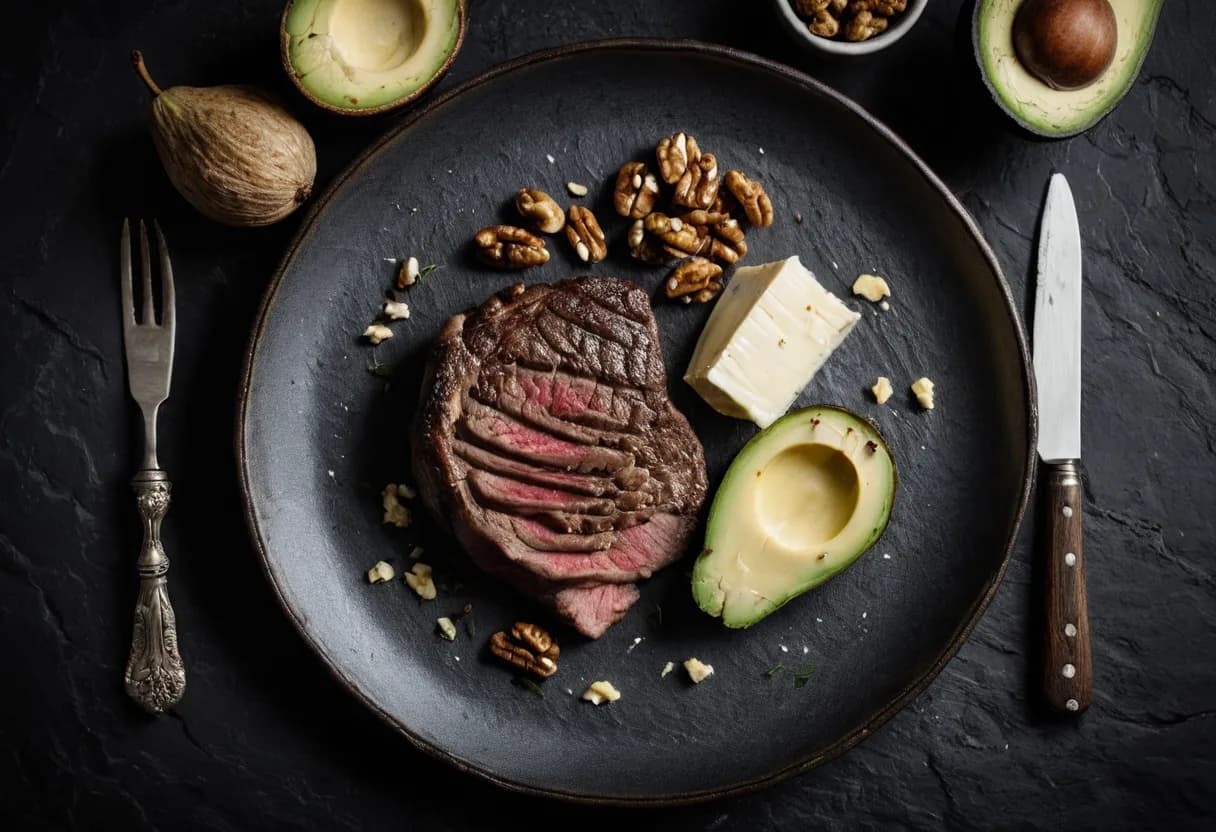
How it differs from low carb
Low carb is a broad range. Ketogenic is a specific protocol: generally under 50 g of carbohydrate a day, sometimes under 30, with fat as the dominant calorie source.
Ketosis itself does not accelerate fat loss when calories and protein are matched. What it delivers is appetite suppression in some people, which lowers calories indirectly.
The conflict with protein
Many versions of the diet cap protein so as not to interrupt ketosis. That cap runs directly against preserving lean mass during a calorie deficit.
If the goal is losing fat while keeping muscle, protein beats ketosis in the order of priority. Ketosis is a means; lean mass is the outcome.
Who it rarely pays off for
Anyone whose appetite is already suppressed by medication: the diet adds restriction to someone already restricted, and the risk of an excessive deficit rises.
Anyone training at high intensity who depends on glycolytic work. And anyone for whom the rigidity kills adherence within two weeks — a diet that does not hold has no effect at all.
Find your protein target
Every recommendation on this page depends on one number that is yours: how much of your weight is lean mass. Work it out with a tape measure, in two minutes, without creating an account.
Informational content about dietary patterns. It is not a nutritional prescription or medical advice, and does not replace clinical care.
The cycle
How your plan works in practice
Four steps, and the fourth one starts the first again. That is why the plan still fits in month three.
Step 1 of 4
You say where you want to get to
Lose fat, gain muscle, trade one for the other or hold steady. You are the one who picks.
Step 2 of 4
Our specialists build your plan
Food and training come out together, around what you already eat and the time you actually have.
Step 3 of 4
Every week we adjust it with your answer
You tell us how the week went and the next week's plan already comes out different.
Step 4 of 4
You measure when you want and see what moved
And when the difference is too small to claim, we tell you it is.
How does the ketogenic diet work?
The ketogenic diet cuts carbohydrate to somewhere around 20 to 50 grams a day, which is low enough for the body to empty its glycogen stores and start producing ketone bodies from fat to fuel the brain. Fat becomes most of the calories, protein stays moderate and carbohydrate largely leaves the plate.
In the first week or two headaches, fatigue and cramps are common — sodium, potassium and magnesium leave with the water, and replacing those three fixes most of the discomfort. For weight loss the result depends on the deficit and the protein, as with any diet; keto's real advantage is lower hunger, which is what makes a deficit last. For strength and explosive performance, the missing carbohydrate usually shows.
When you pick this pattern on the form, our specialists build the menu inside the carb limit while holding your protein target — which is the part most keto plans on the internet get wrong. Epilepsy, type 1 diabetes and insulin use are genuine clinical indications and need medical supervision; we do not go there.
Reviewed on .
Build your menu on this diet.
We build it around what you already eat, and the pattern on this page is just one of the choices on the form.