Diet
High-protein diet: how much is too much
Raising protein during a calorie deficit rests on solid ground. The common mistake is anchoring the target to total weight instead of lean mass.
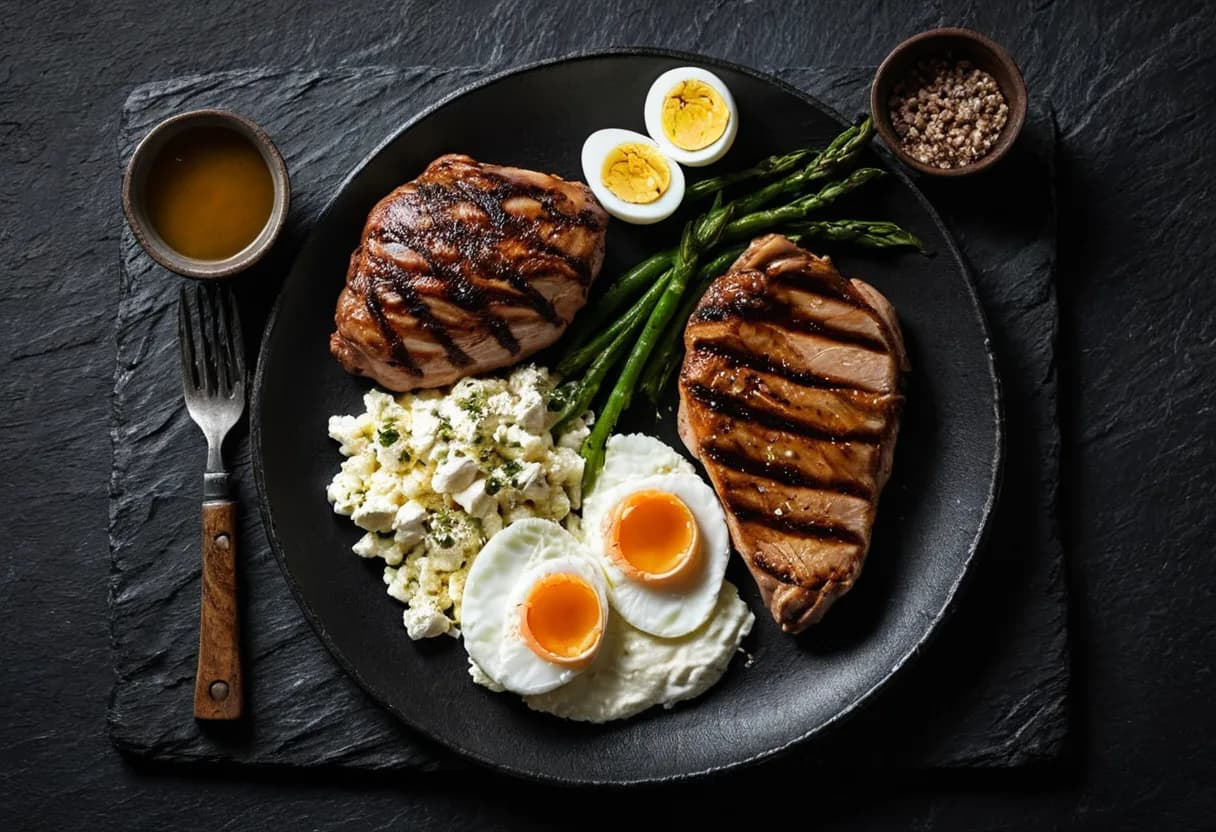
What the diet does
It raises the protein fraction of the diet, generally to between 1.6 and 2.2 g per kg, with two consistent effects: more satiety per calorie and better lean mass retention during restriction.
It is the intervention with the best ratio of evidence to simplicity when the goal is losing fat without losing muscle.
Per kilo of what
Almost every calculator uses total body weight. That works reasonably for lean people and overshoots progressively as body fat rises.
Adipose tissue does not demand protein to be maintained. A 100 kg person at 40% body fat carries 60 kg of lean mass — and the correct target comes from those 60, not from the 100.
The difference is not academic: roughly 70 g of protein per day in the same body, which entirely changes whether the plan is workable.
Limits and caveats
In people with normal kidney function, high protein intake shows no renal harm in the available literature. In established kidney disease the conversation is different and belongs to your doctor.
High protein does not replace a deficit: it protects the composition of what you lose, it does not create the loss.
Find your protein target
Every recommendation on this page depends on one number that is yours: how much of your weight is lean mass. Work it out with a tape measure, in two minutes, without creating an account.
Informational content about dietary patterns. It is not a nutritional prescription or medical advice, and does not replace clinical care.
The cycle
How your plan works in practice
Four steps, and the fourth one starts the first again. That is why the plan still fits in month three.
Step 1 of 4
You say where you want to get to
Lose fat, gain muscle, trade one for the other or hold steady. You are the one who picks.
Step 2 of 4
Our specialists build your plan
Food and training come out together, around what you already eat and the time you actually have.
Step 3 of 4
Every week we adjust it with your answer
You tell us how the week went and the next week's plan already comes out different.
Step 4 of 4
You measure when you want and see what moved
And when the difference is too small to claim, we tell you it is.
How do you build a high-protein diet?
A high-protein diet is one where protein is calculated first and the rest of the calories settle around it. The range that serves people who train sits between 1.6 and 2.2 grams per kilo of body weight, and for anyone in a deficit or carrying more fat the honest version is per kilo of lean mass — because it is muscle that needs the protein, not fat.
In practice, distribution is what decides. Hitting the target with 90 grams at dinner and nothing at breakfast does less than the same amount split across three or four meals, because the synthesis stimulus has a ceiling per meal. Eggs, chicken, beef, fish, plain yoghurt and legumes with grains cover it with supermarket food — supplements are convenience, not a requirement.
Our specialists build your menu from that target and inside what you already eat, with a swap for anything that did not work. High protein is safe for a healthy kidney, but anyone with renal or liver disease, or on a medically prescribed restriction, needs guidance from whoever follows the case — that part is not ours.
Reviewed on .
Build your menu on this diet.
We build it around what you already eat, and the pattern on this page is just one of the choices on the form.