Diet
How to eat when your appetite is gone
When hunger disappears, the calorie deficit stops being the challenge. Preserving lean mass while eating little becomes the challenge — and that is where most plans fail.
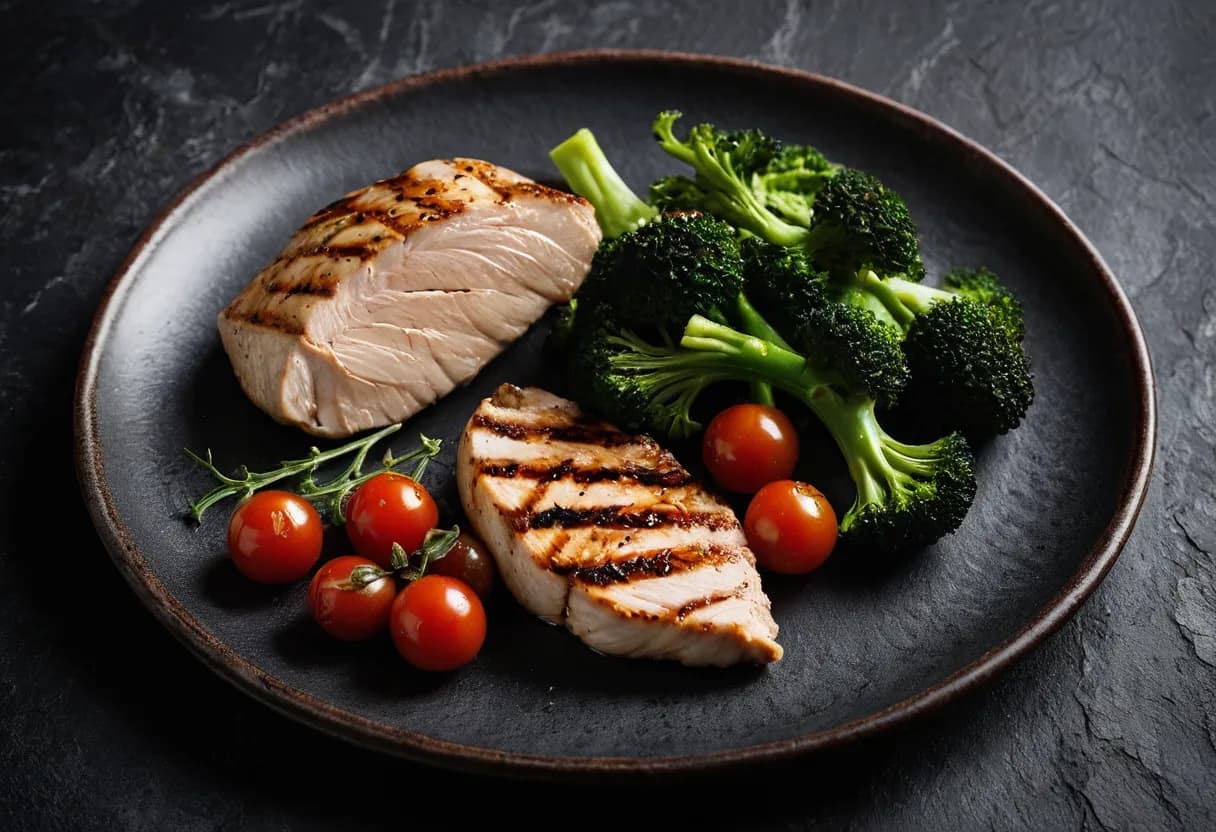
What changes when appetite drops
GLP-1 receptor agonists reduce hunger and slow gastric emptying. In practice, people eat far less without conscious effort.
The calorie deficit, usually the hard part of any diet, starts happening on its own. Which creates the opposite problem: a large, involuntary deficit with no control over the composition of what is being lost.
We give no guidance on medication, dosage, starting or stopping. That belongs to your doctor. What this covers is what goes on the plate.
Why lean mass is the critical variable here
In a calorie deficit the body draws on both fat and lean tissue. The split between them depends mostly on two things: protein intake and how fast the deficit runs.
With appetite suppressed, both get worse at once — less protein goes in, and the deficit is larger than planned.
Losing lean mass lowers basal metabolic rate. Which means that when treatment ends, the body burns less than it did before at the same weight — and that is precisely the regain mechanism.
How to close your protein while eating little
Reverse the order of the plate: protein first, always. If you fill up mid-meal, what got left behind was carbohydrate, not protein.
Favour density over volume: eggs, Greek yoghurt, cottage cheese, shredded chicken, fish, whey. High volume and high fat slow gastric emptying further and end the meal early.
Split into more, smaller meals. Three meals of 40 g of protein are not workable with early satiety; five of 25 g are.
The target comes from lean mass, not body weight: 1.6 to 2.2 g per kg of lean mass.
How to know whether it is working
The scale does not answer that question. It adds everything that left into one number, and in a fast deficit part of what left is muscle.
The useful read is comparing two body composition measurements thirty days apart, and looking at lean mass. If it dropped, the plan needs more protein and a smaller deficit — not more restriction.
Find your protein target
Every recommendation on this page depends on one number that is yours: how much of your weight is lean mass. Work it out with a tape measure, in two minutes, without creating an account.
Informational content about dietary patterns. It is not a nutritional prescription or medical advice, and does not replace clinical care.
The cycle
How your plan works in practice
Four steps, and the fourth one starts the first again. That is why the plan still fits in month three.
Step 1 of 4
You say where you want to get to
Lose fat, gain muscle, trade one for the other or hold steady. You are the one who picks.
Step 2 of 4
Our specialists build your plan
Food and training come out together, around what you already eat and the time you actually have.
Step 3 of 4
Every week we adjust it with your answer
You tell us how the week went and the next week's plan already comes out different.
Step 4 of 4
You measure when you want and see what moved
And when the difference is too small to claim, we tell you it is.
What should you eat on Mounjaro, Ozempic or Wegovy?
People on GLP-1 medication eat little because appetite disappears, and the risk stops being overeating: it becomes missing the day's protein. With little food coming in, the body covers the gap from its own muscle, which is why a large share of the weight lost on these drugs tends to be lean mass rather than fat.
The order of each meal flips: protein first, everything else after. With appetite suppressed you get two or three opportunities a day, and protein that comes last does not come at all. Smaller, more frequent meals help, and a protein drink covers the days when nothing goes down. Strength training is the other half — without the stimulus, muscle leaves even with protein on target.
At BodyLabs the menu for someone on the medication is built around that order and around a calorie floor that never drops below your basal metabolism: someone already eating little does not need a deficit stacked on top. Dose, side effects and whether to continue are a conversation with your doctor — we do not weigh in on medication.
Reviewed on .
Build your menu on this diet.
We build it around what you already eat, and the pattern on this page is just one of the choices on the form.